Roof Ventilation Starts at the Eaves
An attic needs an airflow path, not simply another hole in the roof. Intake at the lower edge and exhaust higher up need to work with the building’s actual design.
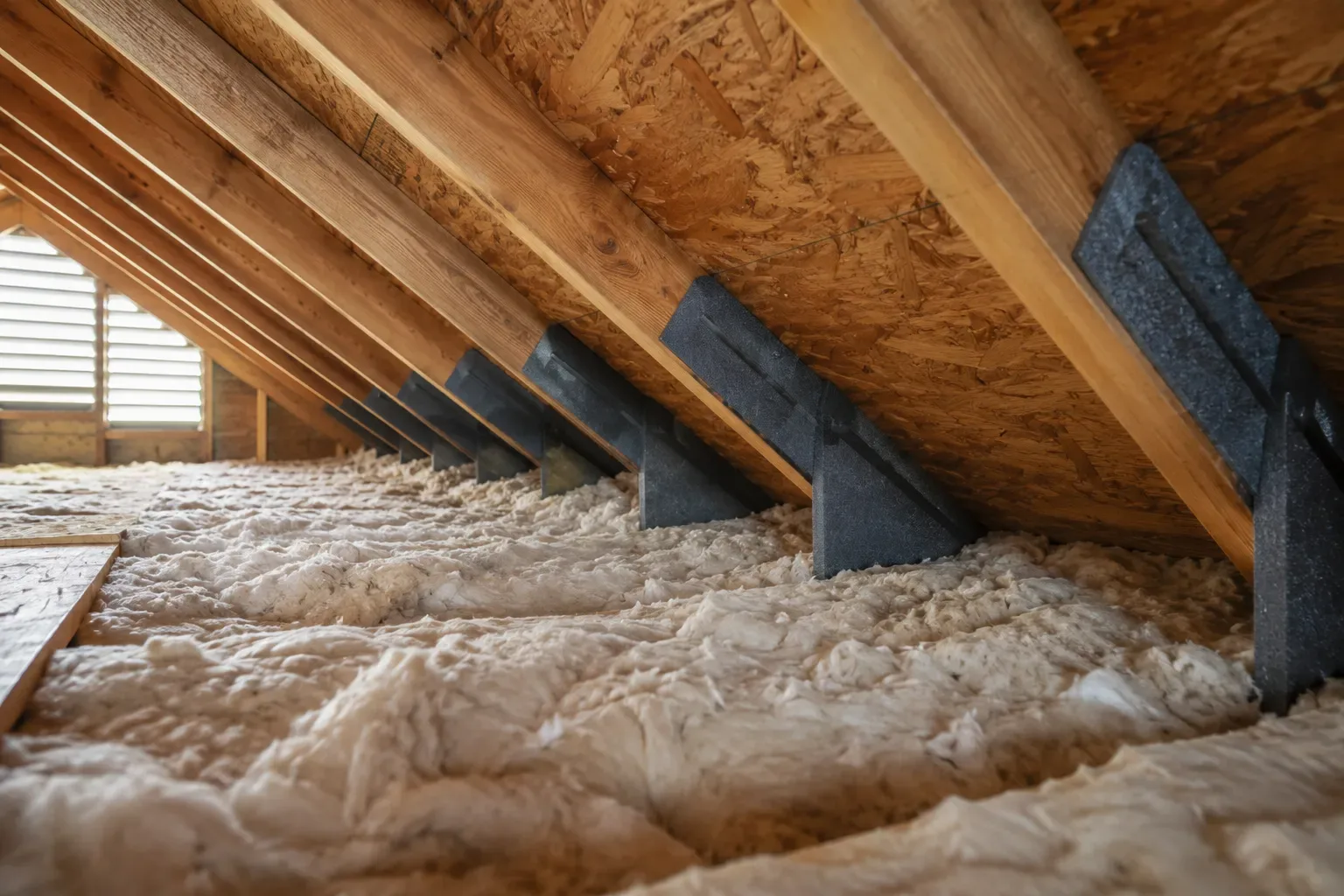
Air needs an entrance and an exit
In a conventionally vented attic, outside air enters through designed intake openings and leaves through exhaust openings. Blocking the intake path can limit how that arrangement works, even when exhaust vents are visible on the roof.
Not every attic is designed the same way. An unvented or conditioned assembly needs a different approach. Adding vents without understanding the construction can create a problem rather than solve one.
Look at the attic as a system
A hot attic or condensation symptom calls for a system assessment. No temperature reduction or energy saving is guaranteed.
- Intake and clear paths
Soffit openings and the path above insulation need consideration. Baffles can help maintain a designed passage where insulation meets the eave.
- Exhaust arrangement
Ridge, box or other exhaust details need to fit the roof and attic. Mixing types does not automatically improve airflow.
- Moisture sources and air leakage
A damp attic may involve indoor air leakage, exhaust discharge or another moisture source. Ventilation should not be treated as the only possible cause or cure.
Include ventilation in replacement planning
A roof replacement is a useful time to review the ventilation arrangement because the roof covering and related details are already part of the work. Include the current attic configuration and any moisture concern in the discussion.
Avoid covering intake openings with new insulation or assuming that every existing roof vent should simply be copied. The design and the actual problem should guide the choice.
Attic ventilation questions
Will a powered attic fan solve every heat problem?
No. Intake, air leakage, the roof assembly and equipment conditions all affect the result. A fan is not a substitute for assessing the system.
Does condensation always mean the roof is leaking?
No. Indoor moisture and air leakage can contribute. The ceiling-stain article explains why tracing the source matters before choosing roofing work.