Waxahachie, Texas · Roofing for homes & businesses
Flat Roof Repair and Replacement in Waxahachie
A low-slope leak needs more than a patch at the nearest seam. Understand how the water enters, where it stays and whether the layers below the surface are still serviceable.
Membrane, drainage and underlying condition belong in one assessment.
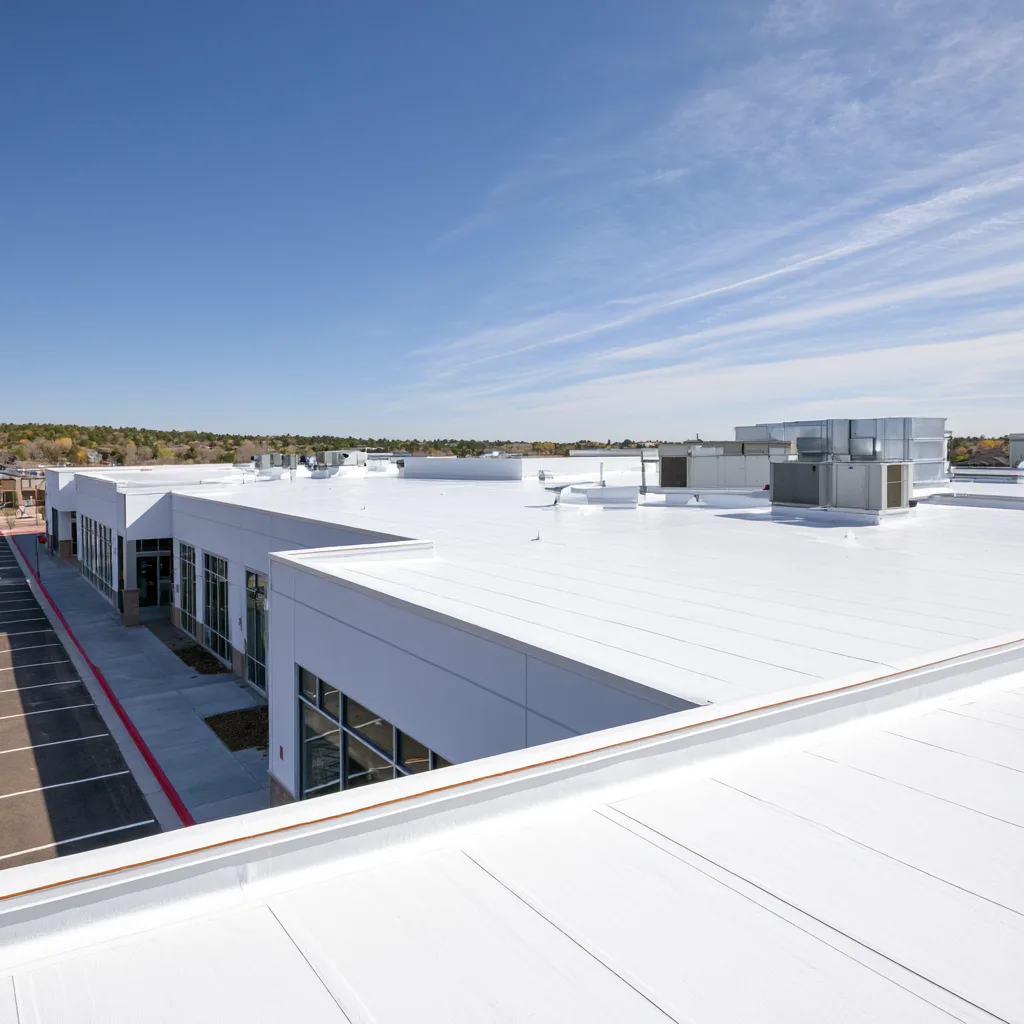
Follow the water across the roof
“Flat” roofs need a designed route for water to leave. Drains, scuppers and slope work together. Debris can restrict an outlet; a low area can retain water even after the outlet is clear.
Water can also move under a membrane before appearing inside. That makes a recurring leak a reason to examine the affected assembly and drainage path, rather than repeatedly repairing the spot above the stain.
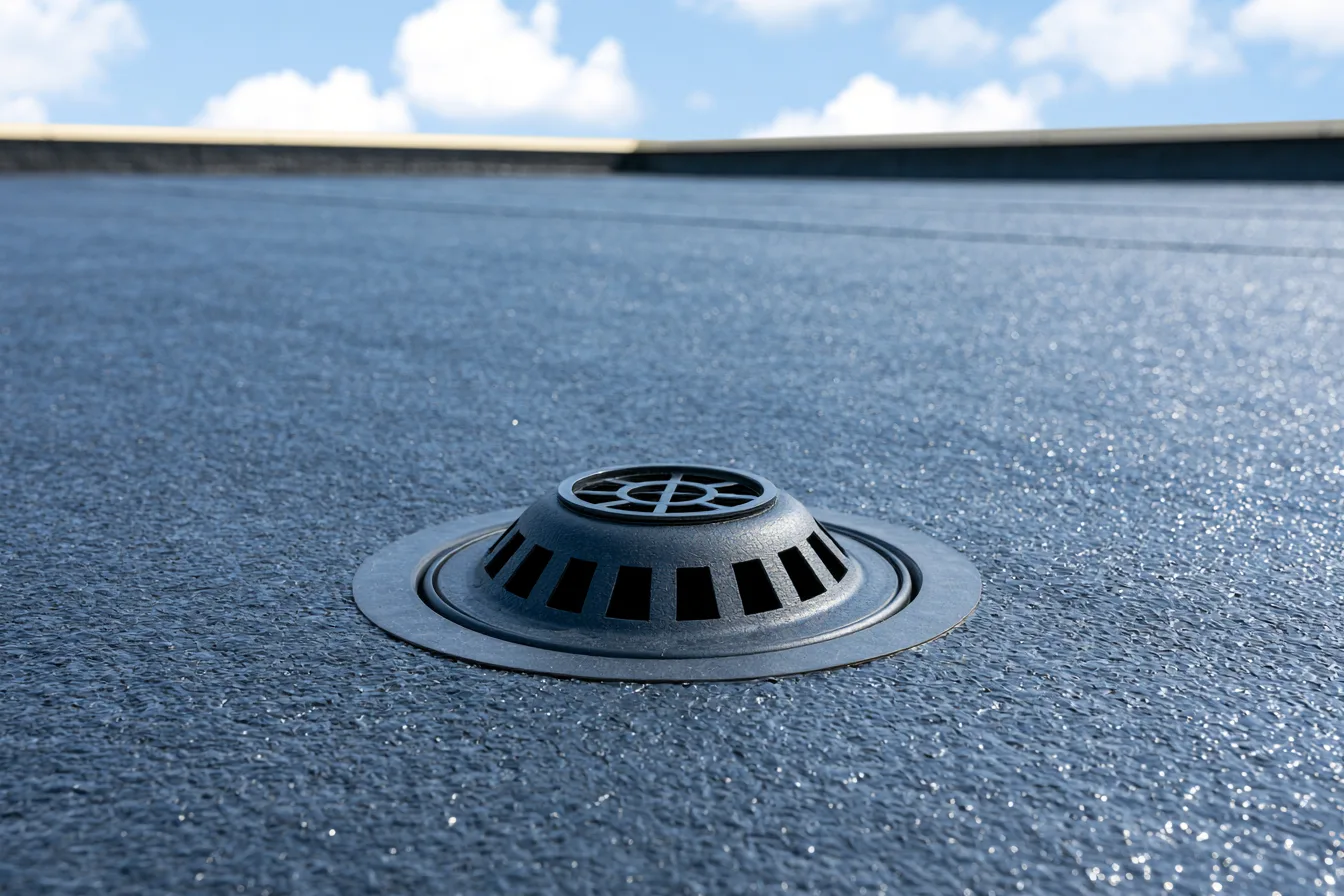
Flat-roof problems that need a closer look
Do not walk onto the roof to investigate a soft area or clear an unfamiliar drain. Safe roof access and the building’s condition govern the assessment.
Open seams or punctures
These are direct water-entry concerns. The condition of the surrounding membrane determines the compatible repair approach.
Persistent water and debris lines
The location of standing water can point to drainage or slope problems. The cause needs examination before selecting a surface-only repair.
Soft areas or recurring interior stains
These can justify investigation below the covering. An exterior patch does not establish that insulation or decking beneath it is dry and sound.
Repair the cause, then the affected layers
For water that stays after rain, the ponding-water article separates drainage correction from waterproofing.
- Trace the entry and drainage
A curb, seam, roof edge or blocked outlet can each create a different water problem. Connect the observed defect to the leak pattern.
- Define the affected material
Determine the extent of wet or deteriorated material beneath the surface before closing the repair.
- Integrate the repair
Use a compatible repair system and a detail that joins the existing roof properly. Coating, membrane work and drainage changes have different purposes.
Low-slope options for different roof conditions
These are discussion paths, not diagnoses. Low-slope additions on homes also need a system suited to the roof pitch and its connection to the main house.
| Condition | Possible direction | Decision to settle |
|---|---|---|
| Localized defect, serviceable base | Targeted repair | Can the repair join sound, compatible material? |
| Serviceable roof needing restoration | Qualified coating or recover | Are moisture, adhesion, attachment and existing layers suitable? |
| Widespread wet or deteriorated assembly | Replacement | Which layers need removal and what drainage changes belong in the new roof? |
Flat-roof questions
Is TPO the only option for a flat roof?
No. TPO is one low-slope membrane option; other systems may fit the building and existing substrate. The TPO page explains its assembly and repair considerations without treating it as the automatic choice.
Can a drain problem be fixed with coating?
Coating does not clear an outlet or create a drainage slope. Repairing drainage and restoring waterproofing may both be needed, but they address different problems.
Does a small indoor leak mean a small roof repair?
Not necessarily. Water can travel below the covering, and insulation may be affected beyond the visible opening. The actual extent is what the repair scope needs to establish.
Waxahachie Precision Roofing
Describe your flat-roof problem
Include the building use, where the leak appears and whether water remains on the roof after rain. Note any known drains, scuppers or recent equipment work.
(469) 517-2900